


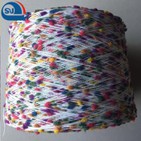


Fiber has two major characteristics: one is that it is so thin that people cannot directly observe it with the naked eye, and the diameter is generally between a few microns to tens of microns or finer; The infinity is related to the type of fiber, which makes the fiber mechanically exhibit long properties, such as a small range of partial deformation when it is bent and twisted, and a considerable deformation even in the elastic range when it is stretched as a whole. Therefore, simply speaking, the fiber is a kind of thin and long, that is, the diameter is so small that it cannot be directly observed by the naked eye, and the ratio of its length to its diameter is dozens of times or more.
Natural fiber
Natural fibers exist in nature and can be obtained directly. According to their sources, they are divided into three categories: plant fibers, animal fibers and mineral fibers.
(1) Plant fiber
Plant fibers are fibers obtained from plant seeds, fruits, stems, leaves, etc., and are natural cellulose fibers. Fibers obtained from plant bast such as flax, jute, apocynum, etc.; fibers obtained from plant leaves such as sisal, abaca, etc. The main chemical component of plant fiber is cellulose, so it is also called cellulose fiber.
Plant fibers include: seed fibers, bast fibers, leaf fibers, and fruit fibers.
Seed fiber: refers to the single-cell fiber grown from the epidermal cells of some plant seeds. Such as cotton, kapok.
Bast fiber: It is a single fiber or craft fiber obtained from the phloem of some plants. Such as: flax, ramie, jute, bamboo fiber.
Leaf fiber: It is a craft fiber obtained from the leaves or leaf sheaths of some plants. Such as: sisal, abaca.
Fruit fiber: fiber obtained from the fruit of some plants. Such as: coconut fiber.
Animal fiber
Animal fibers are fibers obtained from the hair of animals or the glandular secretions of insects. The fibers obtained from animal hair include wool, rabbit hair, camel hair, goat hair, yak wool, etc.; the fibers obtained from animal gland secretions include silk and the like. The main chemical component of animal fiber is protein, so it is also called protein fiber.
Animal fibers (natural protein fibers) include: hair fibers and glandular fibers.
Hair Fiber: Animal hair follicles grow fibers with a multicellular structure composed of keratin. Such as: sheep wool, cashmere, camel hair, rabbit hair, mohair.
Silk fibers: fibers secreted by some insect silk glands, especially by lepidopteran larvae, and by secretions from some mollusks. Such as: silk.
Mineral fibers: fibers obtained from mineral rocks with a fibrous structure, the main components are various oxides, such as silica, alumina, magnesium oxide, etc., and their main sources are various types of asbestos, such as chrysotile, blue Asbestos etc.
Chemical Fiber
Chemical fibers are fibers that have been chemically processed. Can be divided into man-made fibers (regenerated fibers), synthetic fibers and inorganic fibers.
Man-made fibers are also called regenerated fibers.
Man-made fibers are textile fibers that are chemically processed from substances containing natural fibers or protein fibers, such as wood, sugar cane, reed, soybean protein fibers, and other fiber raw materials that have lost their value in textile processing. Man-made fibers mainly used for textiles are: viscose fiber, acetate fiber, cupro fiber.
Regenerated fibers refer to fibers made from highly purified slurries made of natural polymers, such as regenerated cellulose fibers, regenerated protein fibers, regenerated starch fibers and regenerated synthetic fibers.
Synthetic fiber
The chemical composition of synthetic fiber is completely different from that of natural fiber. It is made from some substances that do not contain cellulose or protein, such as petroleum, coal, natural gas, limestone or agricultural and sideline products, first to synthesize units, and then to chemical synthesis and mechanical processing. into fibers. Such as polyester fiber (polyester), polyamide fiber (nylon or nylon), polyvinyl alcohol fiber (vinylon), polyacrylonitrile fiber (acrylic fiber), polypropylene fiber (polypropylene), polyvinyl chloride fiber (chlorine), etc.
Inorganic fiber
Inorganic fibers are made from natural inorganic or carbon-containing polymer fibers by artificial spinning or direct carbonization. Including fiberglass, metal fiber and carbon fiber.